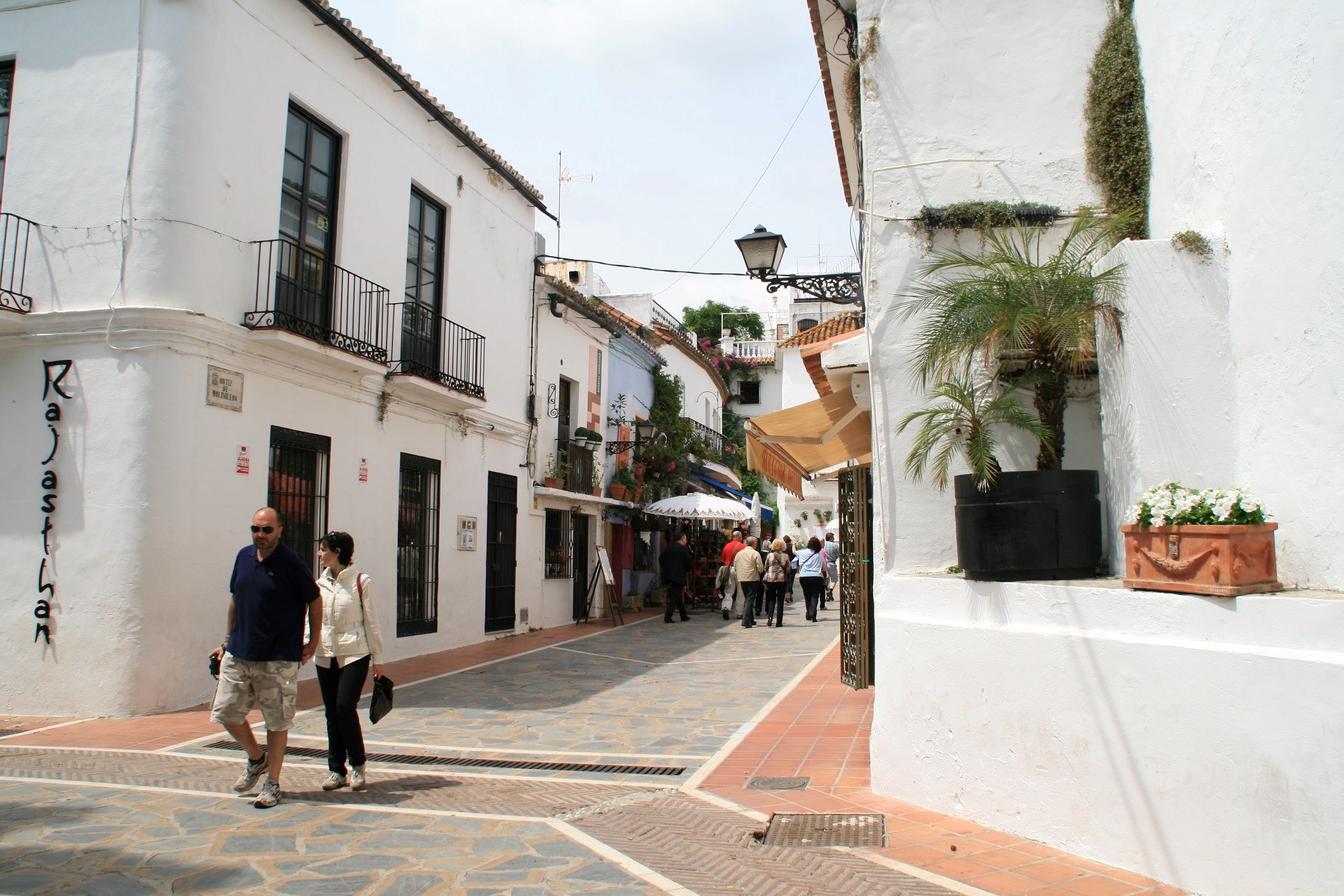
If you only know the city of Malaga, you're missing the best part. Inland you'll find white villages, gorges, ancient caves and a limestone park that feels like another planet. And along the coast, beyond the beach towel, there's jet skiing and dolphin watching. Here are the must-sees, with all the details you need to plan your trip.
White villages with dizzying views
The inland villages are the essence of the province. Almost all of them are within two hours of the capital, so they easily fit into a day trip.
Ronda is the star stop. Its Puente Nuevo spans the Tajo, a gorge with a drop of more than a hundred metres that splits the town in two, and the old quarter is best explored on foot between viewpoints. It's easy to combine with a relaxed lunch and a quiet afternoon.
Frigiliana, in the Axarquía, is one of the most photographed white villages in Andalusia: steep streets, flowerpots, whitewash and a Moorish quarter that climbs gently uphill. Comares, nicknamed the balcony of the Axarquía, crowns a hilltop and offers 360-degree views over mountains and sea; if you enjoy walking, there are trails leading down through olive groves.
The Caminito del Rey: Spain's most famous walkway
Clinging to the walls of the Gaitanes Gorge, in Ardales, the Caminito del Rey is a one-way linear route along wooden walkways bolted to the rock, dozens of metres above the river. You enter at one end and exit at the other, so you'll need to plan how to get back to your starting point.
- Individual ticket: €10.
- Guided visit: €18 (groups of up to 30 people, with a certified guide, in Spanish and English).
- Shuttle bus between entry points: €2.50.
- Parking: €2/day.
- Access from age 8; children under 8 are not permitted. Bring original ID or family documentation to prove age.
Caves and rock formations
Malaga's geology offers several plans. The Nerja Caves, on the eastern coast, are among the most impressive in Spain, with enormous chambers and one of the largest columns of stalactites and stalagmites in the world.
- Standard hours: 9.15am to 4.30pm (last entry at 3.30pm).
- Extended hours (June to September, Christmas, Easter Week and long weekends): 9.15am to 5.30pm (last entry at 4.30pm).
- Closed on 1 and 6 January, 15 May and 25 December.
Along the same stretch of coast, in Rincón de la Victoria, is the Cueva del Tesoro, a rarity as one of the few caves of marine origin open to visitors in Europe, and named after the legend of a hidden treasure.
Inland, near Antequera, the Torcal Natural Area is a maze of limestone sculpted by millions of years of erosion, with shapes that look like stacked sculptures. It's one of the finest examples of karst landscape in Europe and can be explored via signposted trails of varying difficulty.
- Access to the area and the Torcal Alto Visitor Centre: free.
- Visitor centre hours: winter (November to March), 10am to 5pm; summer (April to October), 10am to 7pm.
- On days with traffic restrictions, a shuttle bus runs: €2 return.
Sea and adrenaline on the Costa del Sol
If you're after excitement without straying far from the coast, Fuengirola and Puerto Banús offer the best water-based activities. In Fuengirola you can ride a jet ski along the coastline with no previous experience needed, or board a dolphin-watching trip, a relaxed plan that's ideal for families wanting to see marine wildlife in its natural habitat.
In Puerto Banús, in Marbella, jet skiing combines adrenaline with the most glamorous atmosphere on the coast and views of the yachts. Many of these activities are suitable for all levels and can be combined in a single day.
How to plan your trip
The province is easy to get around by car: almost all of these destinations are one to two hours from the capital, making it possible to put together day trips. Without a car, Ronda has a train station and much of the coast is connected by regular bus services from Malaga.
- Book ahead for anything with limited capacity (Caminito del Rey and guided cave visits).
- Combine nature and a village in the same day: for example, El Torcal plus Antequera, or the Nerja Caves plus Frigiliana.
- In summer, save hiking and village visits for early morning and late afternoon; reserve midday for caves (cool) or the sea.
- Always check opening hours and closure dates the day before: these change depending on the season and public holidays.