When can you see orcas in the Strait?
July and August, and the reason is bluefin tuna. The Strait's orcas follow the tuna in and out of the Mediterranean, and they have learned to take the fish off the rod-and-line fishermen at the exact moment it is being hauled up. Outside those two months the odds drop sharply.
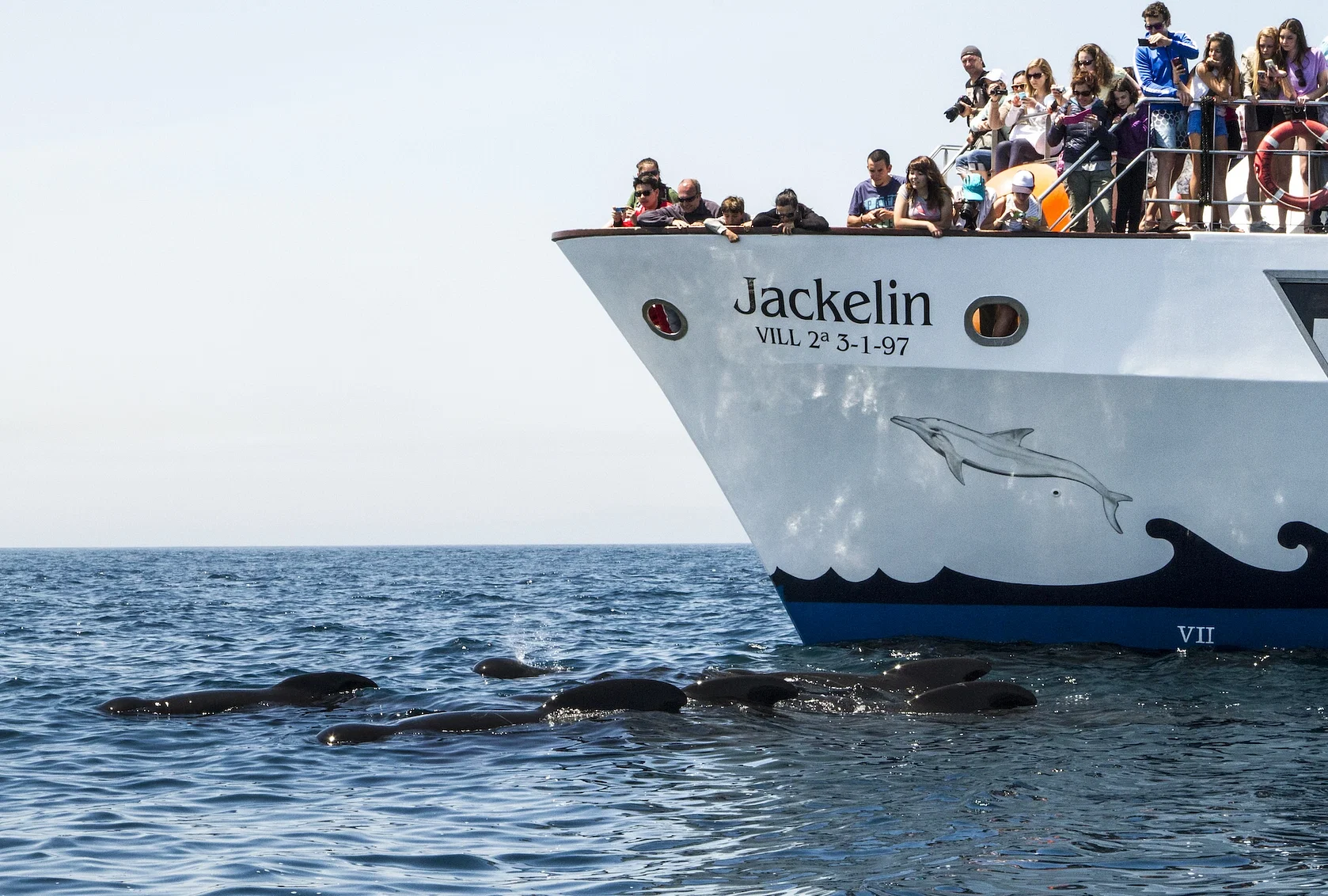
The rest of the year the Strait still has plenty to show: resident pilot whales almost year-round, striped and bottlenose dolphins, and fin whales passing through in spring and summer. It is a different trip, but it is not a consolation prize.
What can you see, and when?
- Orcas: July and August, following the bluefin tuna
- Pilot whales: resident, seen almost all year
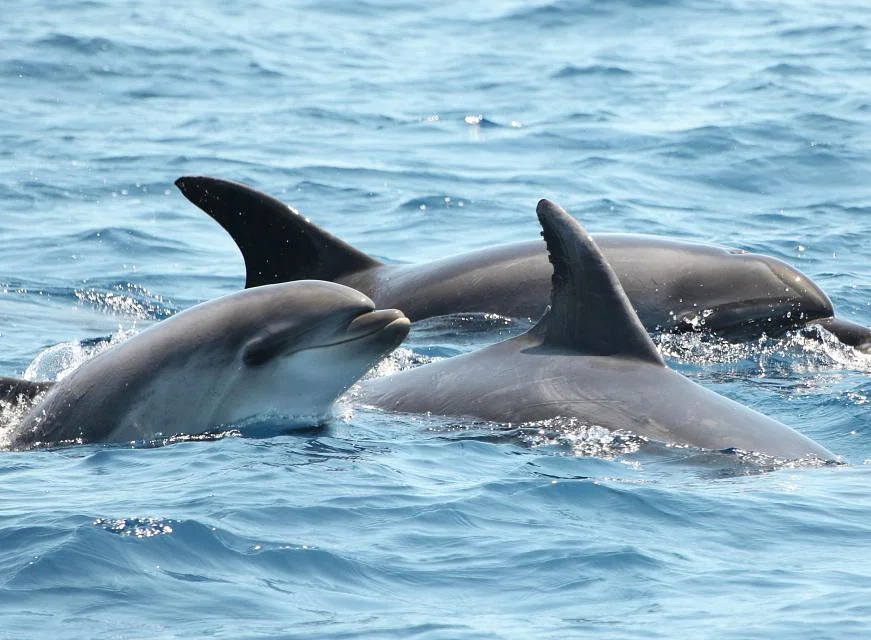
- Bottlenose, striped and common dolphins: all year
- Fin whale, the second largest animal on the planet: spring and summer, passing through
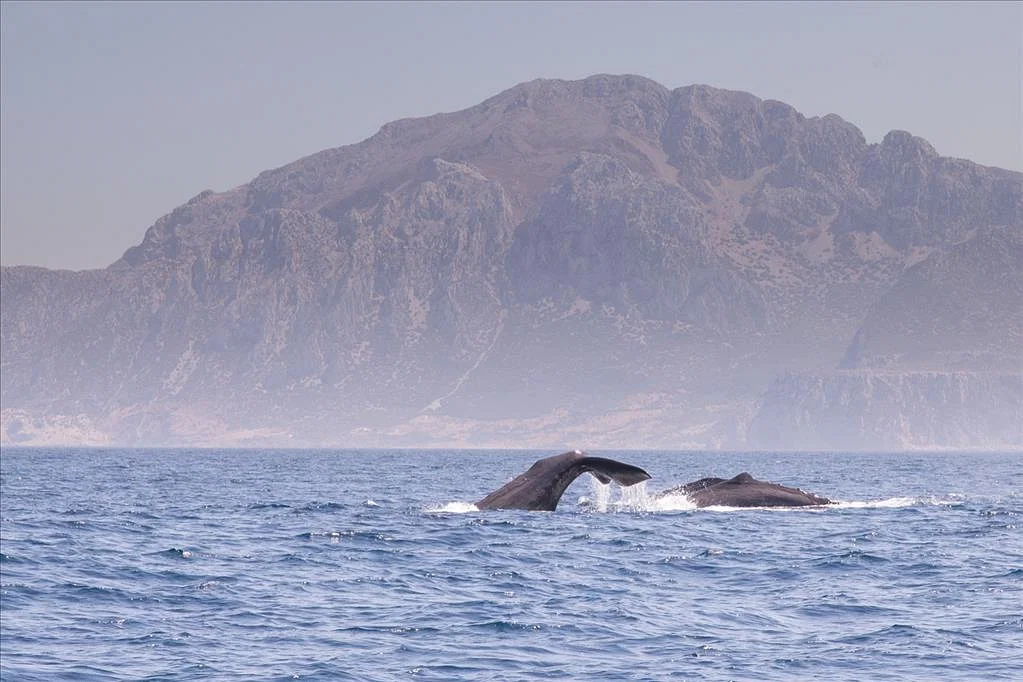
- Sperm whales: less frequent, mostly in spring
Are sightings guaranteed?
No. These are wild animals in open water and nobody can promise a sighting. What is true is that the Strait is a funnel: everything entering or leaving the Mediterranean squeezes through fourteen kilometres of water, so the odds are far better than almost anywhere else. If anyone guarantees you orcas, be suspicious.
Which of the two trips should you take?
There are two, and the difference is not the boat. It is the season, and what you are hoping to see.
 Sighting of orcas, whales, and dolphins in the Strait of GibraltarCheck availability →
The orca-specific trip makes sense in July and August, when they are actually there. It runs further out, towards the water where the tuna boats work, and it is the one that gives you a shot at the scene people come for.
 Whale and Dolphin Watching in the Strait of Gibraltar (departures from the Tarifa Harbour)Check availability →
The general cetacean trip runs the rest of the year and is the sensible choice outside high summer: pilot whales, dolphins and, with luck, a fin whale. It costs less and sails more often.
How far is it from Málaga?
About two hours by car, roughly 150 kilometres of motorway. And it is worth being straight about this: the boats leave from Tarifa harbour, not from Málaga, and you make your own way there. This is a full day, not a morning. If you are staying on the western Costa del Sol — Marbella, Estepona — it is considerably closer.
It is worth planning it as a day in Tarifa: the old town is walled, walkable in an hour, and some of the best beaches in Andalusia are right next to it.
What happens if it is windy?
You may not sail, and that is good news. Tarifa is the windiest place in mainland Spain — which is why it is full of kitesurfers — and the levante can build a heavy sea in a few hours. When a trip is cancelled for wind, be grateful: in that sea you would see nothing and feel awful. Don't book it for the last day of your trip, in case the date has to move.
Is it suitable for children?
Yes, and they usually love it, but these are two- to three-hour trips in open water. If anyone in the family gets seasick easily, the tablet goes in before boarding, not once the queasiness starts. And bring a layer even in August: out in the Strait, with the boat moving, it gets cold.