Start where the city started: the Alcazaba and the Roman Theatre
Begin at the top. The Alcazaba is an 11th-century Moorish fortress-palace, one of the best preserved in Spain — a climb through stone ramps, fragrant gardens and lookout towers, with the views over the city and the port opening up as you go. It's the single most atmospheric thing in the centre, and it sets up everything below it.
Directly beneath it sits the Roman Theatre, buried under later buildings for centuries and only rediscovered in the 20th century. You can walk along its original stone tiers, and it's beautifully lit after dark. The two sit almost on top of each other — Roman, then Moorish, then modern city — which is exactly why they're best seen together, and why a guide earns their keep here.
 Walking guided tour to the Alcazaba and the Roman Theater of MálagaCheck availability →
La Manquita and the streets that are the point
Málaga Cathedral is Renaissance-Baroque, took more than 200 years to build and was never finished — one of its two towers is missing, which is why locals call it La Manquita, "the one-armed lady". Go inside, and if you can, climb to the rooftops for the best skyline in the city.
From there the centre is just streets, and the streets are half the reason to come. Calle Larios is the grand 19th-century shopping avenue — marble underfoot, canopies in summer, a wall of lights at Christmas. It spills into Plaza de la Constitución, the social heart, all terraces and people-watching. Duck into the Pasaje de Chinitas between the two: a narrow passage of tiled walls and old balconies that was once full of cafés and cabarets, and still keeps a bohemian charm.
Picasso's city
Málaga is Picasso's birthplace, and it shows. The Museo Picasso, in the handsome Buenavista Palace, holds more than 200 of his works. A few minutes away, the Church of Santiago — Gothic, Mudéjar and Baroque layered together — is where he was baptised; there's a plaque marking it. Together they're the spine of the city's Picasso trail.
Atarazanas: the market that was a shipyard
The Atarazanas Central Market is more than somewhere to shop. The 19th-century iron-and-glass hall stands on what was a Moorish shipyard — its great horseshoe-arch doorway is the original. Inside it's a sensory hit of fresh produce, Mediterranean seafood, olives and spices. Do what locals do: take a tapa and a glass of vermouth at one of the counters and watch the place work.
See it all in one walk — with the tickets already sorted
Everything above is walkable in an afternoon, but the monuments each have their own entrances, hours and queues — and the Cathedral and Alcazaba both charge separately. The easy way to do the centre is a guided walk that already includes the entries, so you're learning what you're looking at instead of standing in ticket lines.
 Complete Malaga old town walking tour with admission tickets includedCheck availability →
If you'd rather go at your own pace — a couple, a family, or you just want to set the rhythm — the same route runs as a private walk with your own guide.
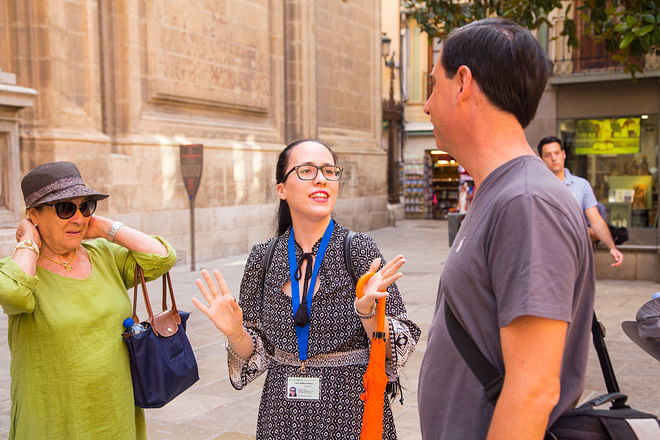 Private walking tour by the old town of MalagaCheck availability →
End on a rooftop
Finish the day up high. The rooftop bars at the AC Hotel, Molina Lario and Hotel Valeria all look out over the Cathedral and the port, and Málaga's sunsets do the rest. It's the right full stop after a day on foot.
Can you really see all ten in one day?
Yes — the whole centre fits inside a fairly small square, so nothing is far from anything else. Start early, keep the Cathedral and Alcazaba for their opening hours, and leave the market and the rooftops for the ends of the day. If you want the history to join up rather than pass in a blur, do the core of it — the Alcazaba, the Roman Theatre and the monuments — with a guide, and wander the streets on your own afterwards.